570. Catherine Lamb

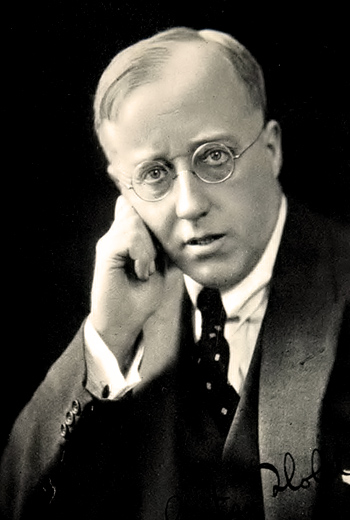
(May 2024) Episode 570 is CATHERINE LAMB, a contemporary composer of sound. Her compositions explore the harmonic spaces between conventional notes, liminal tones and textures, aural shapes. Her sheet music consists not of standard notes but of geometric shapes, not unlike those of George Crumb. It sounds like liquid mathematics, and I marvel at the vision inside Lamb’s mind. I find this music mesmerizing and fascinating.

Favorite piece (solo/duo): Prisma Interius VII

Favorite piece (ensemble): String Quartet

Compared to expectations: ↑

Recommendation: It’s not for everyone, but I really like this kind of stuff.

569. Professor Longhair

(May 2024) Episode 569 is PROFESSOR LONGHAIR. As I continue my mini-tour through New Orleans music, I come upon one of its fathers. “Fess” was best known for his piano style, which incorporated Caribbean rhumba and calypso to create a rhythmic style adopted by generations of New Orleans musicians including Fats Domino, Allen Toussant and Dr. John. He never broke into the big time like the artists he influenced, perhaps in part because his singing style is comparatively a bit clipped and less polished. But you can’t not have a good time with his boogie.

Favorite album: Rock ‘n’ Roll Gumbo

Favorite song: Tipitina

Compared to expectations: same

Recommendation: A compilation album will provide what you need to know.

568.Ornette Coleman

(May 2024) Episode 568 is ORNETTE COLEMAN. A motivation that keeps me going through the time-consuming, often tedious slog of the Opus Project is the joy of discovery. And Ornette Coleman was a supreme joy to discover. Of course, I knew who he was and had heard some of his work. But with my limited knowledge of jazz music and history, and as I am finding that free jazz might be my favorite form of it, here I stumble upon the guy who invented it. Wonderful. Free jazz’s improvisation without harmony, melody, chord changes made Coleman polarizing, but inspired John Coltrane’s “Ascension” (my favorite of his) and the development of avant-garde in music. He wasn’t limited to just the jazz idiom, and composed works performed by the London Symphony Orchestra and others. While saxophone was his main instrument, he also took up trumpet and violin (I love what he does that that).

Favorite album: Science Fiction

Favorite orchestral album: Skies of America

Favorite song: Theme From A Symphony (variation one)

Compared to expectations: ↑

Recommendation: Start with Free Jazz (1960), which launched it all. To me his peak are the five albums between Science Fiction (1971) and Body Meta (1976), including Skies of America (1972) with the LSO

567. Acid King

(May 2024) Episode 567 is ACID KING. There is no such thing as a perfect band, because everyone has different tastes. But to my current taste, Acid King is as perfect as it gets. As stoner metal has emerged as my favorite kind of metal, Acid King seamlessly checks all the boxes – the loudness, the lowness, the fuzz and the backgrounded vocals. No frills, no extras, no arpeggios, no operatics.  Just pure, dedicated stoner metal goodness. I love it. And notable for being fronted by a woman (Lori S), which is uncommon.

Favorite album: Busse Woods

Favorite song:  Phase II

Compared to expectations: ↑

Recommendation: I can’t recommend this highly enough.

566. Popol Vuh

Episode 566 is POPOL VUH. They are categorized as a Krautrock band but the German word term for it, “kosmische Musik,” fits better as they are cited as pioneers of “space music.” And electronic music too, as their first two albums featured the Moog synthesizer. But then leader Florian Fricke set that aside for piano and guitars, creating ambient soundscapes and textures with ethereal, at times spiritual, dimensions and non-European percussion and vocals. Fricke was close with Werner Herzog and composed soundtracks to several of his films. Among the Krautrock groups, Popol Vuh’s approach was closer to Tangerine Dream and Ash Ra Tempel (as contrasted with Kraftwerk and Neu!). But the artist I find most similar in sound is Mike Oldfield. Like Oldfield (and Manuel Göttsching) Fricke mastered that lovely high pitch warbly guitar tone. Popol Vuh was a progenitor of world music and New Age, but I must make clear that I would not identify Popol Vuh with either of those genres as they came to be known. I adore 1970s electronic/ambient music but get turned off by the “New Age” style it evolved to by the 1990s (I’m looking at you Tangerine Dream).

Favorite album: Einsjäger und Siebenjäger

Favorite song: Hosianna Mantra

Compared to expectations: ↑

Recommendation: Most everything is good here. The early electronic albums have their appeal, but I like the mid-1970s spiritual stuff the best. Least are the late 1990s albums which start to sound New Age-y.

565. AMM

(April 2024) Episode 565 is AMM. This was a UK-based free improvisation group, active for 5+ decades. Their performances were intentionally devoid of form and structure, just letting the sounds of their percussion, saxophone, guitar, piano, string, and whatever else was lying around guide them where they may. This is extremely opposite of popular music and is generally only appreciated by a select avant-garde crowd. However, I did find a use if not an allure as a background sound while I worked or puttered around. It is distinctly not New Age but in this sense it can fill a role as ambient music. 

Favourite recording: The Crypt

Compared to expectations: ↑

Recommendation: This is very niche and likely not for you. But if you’re experimental try it in the background.

564. The Turtles + Flo & Eddie

(April 2024) Episode 564 is THE TURTLES and FLO & EDDIE. As a Frank Zappa enjoyer I always thought of the Turtles as the band Flo & Eddie (Howard Kaylan and Mark Volman) were in before they joined the second version of the Mothers of Invention, rather than the reverse. It turns out they provided a lot more enjoyable 60s LA pop/rock beyond “Happy Together,” “Elenore” and “You Showed Me.” Five good albums worth, augmented by their characteristic humor (the line “you’re my pride and joy etc.” from “Elenore” get me every time). After the Turtles folded, Flo & Eddie reached the prurient zenith of their humor with the Mothers (e.g. “Bwana Dik”) and recorded several quirky albums on their own.

Favorite album: The Turtles Present the Battle of the Bands

Favorite song: Happy Together

Favorite Flo & Eddie album: Fillmore East – June 1971 (with the Mothers)

Compared to expectations: ↑

Recommendation: Any of the albums are good; I like Battle of the Bands because of its intentional variety, although Happy Together scores higher.

563. The Dave Clark Five

(April 2024) Episode 563 is THE DAVE CLARK FIVE. Of all the contemporaries, the Dave Clark Five looked and sounded the most similar to the Beatles. They even knocked “I Want To Hold Your Hand” off the #1 slot. Their hit “Because” would fit nicely on the Hard Days Night soundtrack. They had success in the U.S. too and were the second British band to appear on the Ed Sullivan show. And like Lennon-McCartney and unlike other peers, Clark and Smith wrote many of their best songs, like “Glad All Over,” “Bits and Pieces,” “Any Way You Want It,” “Catch Us If You Can.” They defied trends by not having a psychedelic period and folded as the 60s ended. As was the custom, they released separate US and UK albums and there’s a lot of filler on them, so choosing a favorite album is a bit hollow.

Favourite album: Glad All Over

Favourite song: Because

Compared to expectations: ↑

Recommendation: A greatest hits album is all you need and worth having.

562. Muddy Waters

(April 2024) Episode 562 is MUDDY WATERS. As the “father of the Chicago blues,” it’s hard to measure his impact. He helped make Chicago a capital of blues music, fronting and fostering many famous musicians and songwriters of the genre. Any listener of classic rock will immediately recognize his influence there, as so many rock groups covered and adapted his songs. Personally, I like best his 1940s-early 1950s recordings, which accords with my preference among blues music for the earlier generation of acoustic guitar performers (Johnson, Jefferson, Patton, Cotton, etc.). However, I must admit that the electric blues style, the one he is most famous for, tends to lose my attention fairly quickly. And I have idiosyncratic taste for his 1968 album “Electric Mud,” considered the nadir of his career by critics, but for me it’s Muddy deliciously awash in fuzzed up psychedelic guitar.

Favorite album: Folk Singer

Favorite song: Feel Like Goin’ Home

Guilty pleasure album: Electric Mud

Compared to expectations: same

Recommendation: There are lots of compilation albums, but I suggest “His Best: 1947 to 1955”

561. Pavement

(April 2024) Episode 561 is PAVEMENT. I’m too old to have had 90s bands be a formative part of my youth, but still close enough in age to those for whom they were. So I get that Pavement’s slacker rock fit the zeitgeist of the time. And why they gained an indie cult following. But listening to it at a remove, it doesn’t work for me. Kinda boring, gotta say. It wasn’t all bad. But too much strum-beat in here and I can’t stand strum-beat.

Favorite album: Crooked Rain, Crooked Rain

Favorite song: Trigger Cut / Wounded-Kite at :17

Compared to expectations: ↓

Recommendation: If this gives you an emotional jolt of nostalgia, sure. But I can’t recommend coming into this fresh other than as a pop culture historian.