680. Andrés Segovia

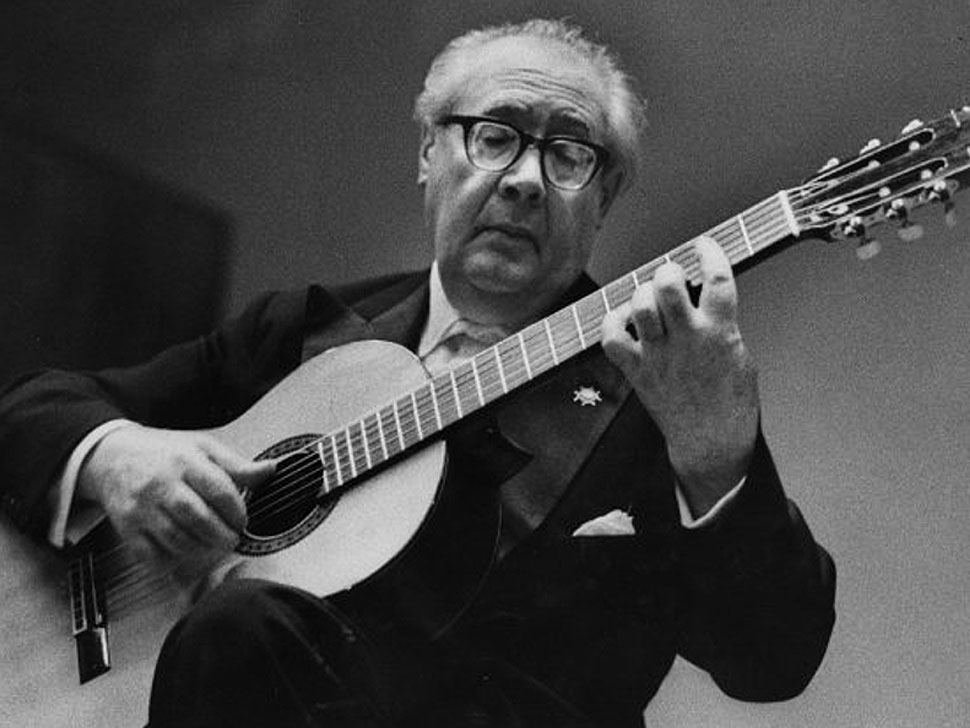
(September 2025) Episode 680 is ANDRÉS SEGOVIA. He was far from the first, but he contributed more than anyone to popularizing classical guitar as a lead instrument in its own right, due to his touring and recording in the mid-20th Century. And he was self-taught! While he did compose some (mostly small) pieces on his own, he made a mark as interpreter of works written for other instruments, most prominently of J.S. Bach. The other big area was contemporary works written specifically for him, the most notable (to me) is Joaquín Rodrigo’s Fantasía para un Gentilhombre, a collaboration that delightfully evokes a pastoral Spanish landscape.

Favorite piece: Fantasia para un Gentilhombre

Compared to expectations: same

Recommendation: Segovia plays Bach is a good one-album length of material. There are a couple collections (of four and nine volumes) that capture a wider scope of work.

673. Žibuoklė Martinaitytė

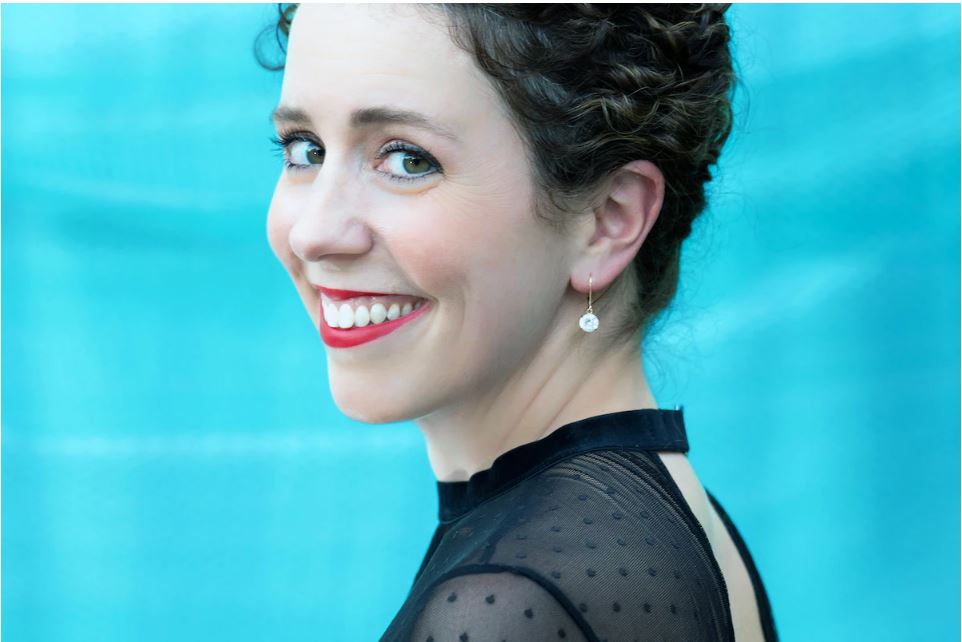
(September 2025) Episode 673 is  ŽIBOUKLĖ MARTINAITYTĖ. At this point deep into the Project, there aren’t many artists that WOW me anymore. So it is an uplifting surprise when I discover one. Žibuoklė Martinaitytė WOWed me. She is a Lithuanian classical composer who creates works that use tension and layers that transport you to unsettling, haunting and dynamic spaces. I’m not enough of a musicologist to be able to label it, but I’ve listened to enough contemporary ‘classical’ artists to say that there is an identifiable style with common elements among several 21st century (mostly women) composers* (call it post-post-minimalism?). And Žibuoklė Martinaitytė is among them. I love her work. And I hope to dig deeper into this field.

Favorite piece: Saudade

Favorite orchestral piece: Sielunmaisema

Favorite orchestral piece: Chant des Voyelles

Favorite album: Hadal Zone

Compared to expectations: ↑

Recommendation: Start out with any of the pieces above. She has several CD-length recordings that are good compilations, including Horizons, In Search of Lost Beauty… and Ex Tenebris Lux

* Caroline Shaw, Hildur Guðnadóttir, Anna Clyne, Julia Wolfe, Michael Gordon, David Lang, Anna Thorvaldsdóttir, among others.         

643. Ruth Crawford Seeger

(April 2025) Episode 643 is RUTH CRAWFORD SEEGER, following the recent episode on her stepson, Pete Seeger. Composing in the 1920s-30s, she and her colleagues became known as “ultramodernist,” heavy on dissonance. When the Seeger family moved to Washinton DC to work with the Library of Congress on folk collections, she published her “American Folk Songs for Children” which became widely used. Her oeuvre is not large, but it is rather interesting.

Favorite piece: Suite for Wind Quintet

Favorite vocal piece: Three Chants

Compared to expectations: same

Recommendation: Start with her String Quartet (1931), her most famous work.

633. Elliott Carter

(February 2025) Episode 633 is ELLIOTT CARTER, one of the most notable American composers of the late 20th century. His early works are neoclassical but evolved to modern and “ultra-modern” styles, and he became known for his rhythmic complexity. He used conventional formats and did not go experimental (such as to electronic or mixed media), but it is still challenging to the ear. I really like his stuff. His legacy is enhanced by his longevity; he composed some 20 pieces after he turned 100 years of age. It’s a shame he is not better known compared with other American composers (looking at you Gershwin).

Favorite piece: Symphonia: sum fluxae pretium spei

Favorite chamber piece: String Quartet No. 3

Compared to expectations: ↑

Recommendation: Try my favorite pieces and if you like, move into the symphonies, concertante and chamber pieces.

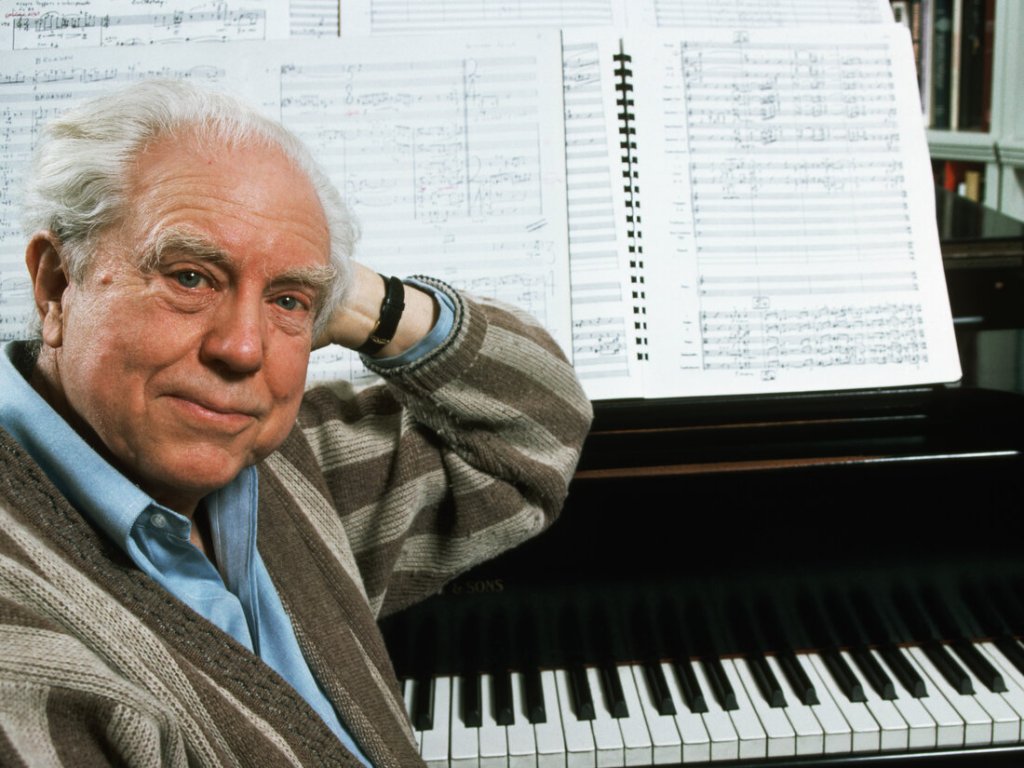
Composer Elliott Carter at the piano in 1989.

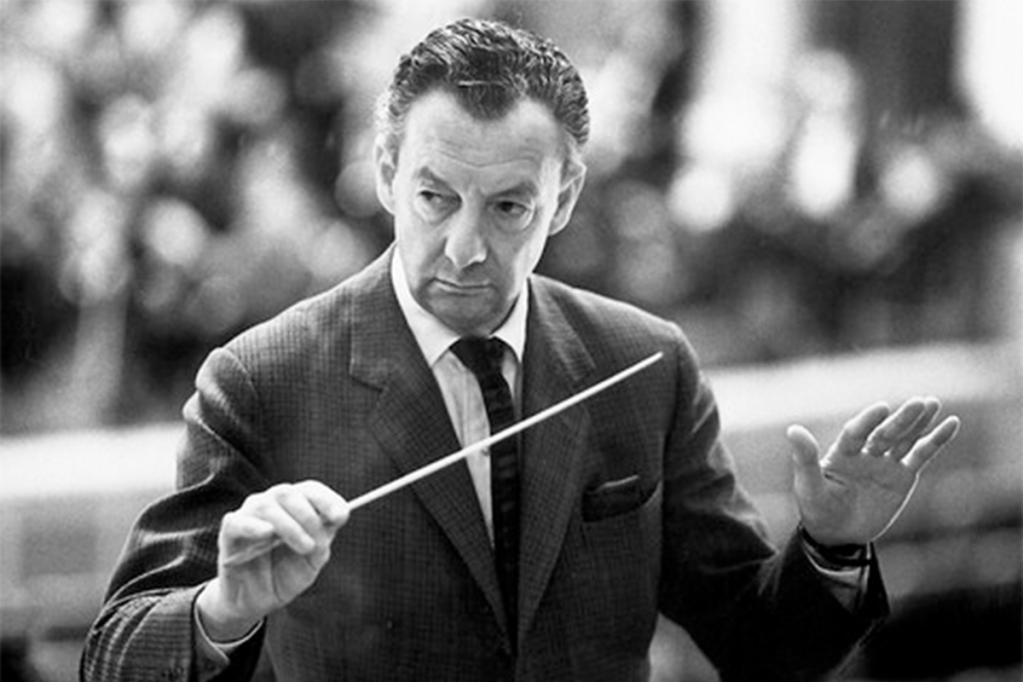
616. Benjamin Britten

(November 2024) Episode 616 is BENJAMIN BRITTEN, one of the most renowned English composers of the 20th century. Operas and choral works are his most recognized forms, although he composed in a wide range: choral, voice, chamber, orchestral, film scores. Overall the character of his work is rather normie, a “progressive conservatism” as one critic called it. While he was influenced by Berg, Stravinsky and Schoenberg, his music is not avant-garde and does not defy convention. But there is a much interesting to the ear. Characterizing his own style, Britten said composers should aim at “pleasing people today as seriously as we can.”

Favourite piece: War Requiem

Favorite chamber work: Cello Suite No. 3 (dedicated to Mstislav Rostropovich)

Favourite choral work: Missa Brevis in D for Choir and Organ

Favourite solo piece: Six Metamorphoses after Ovid

Compared to expectations: same

Recommendation: War Requiem, his most famous work is a good place to start. I’m not into opera but try Peter Grimes if you are. I like the various cellos works.

596. John Oswald

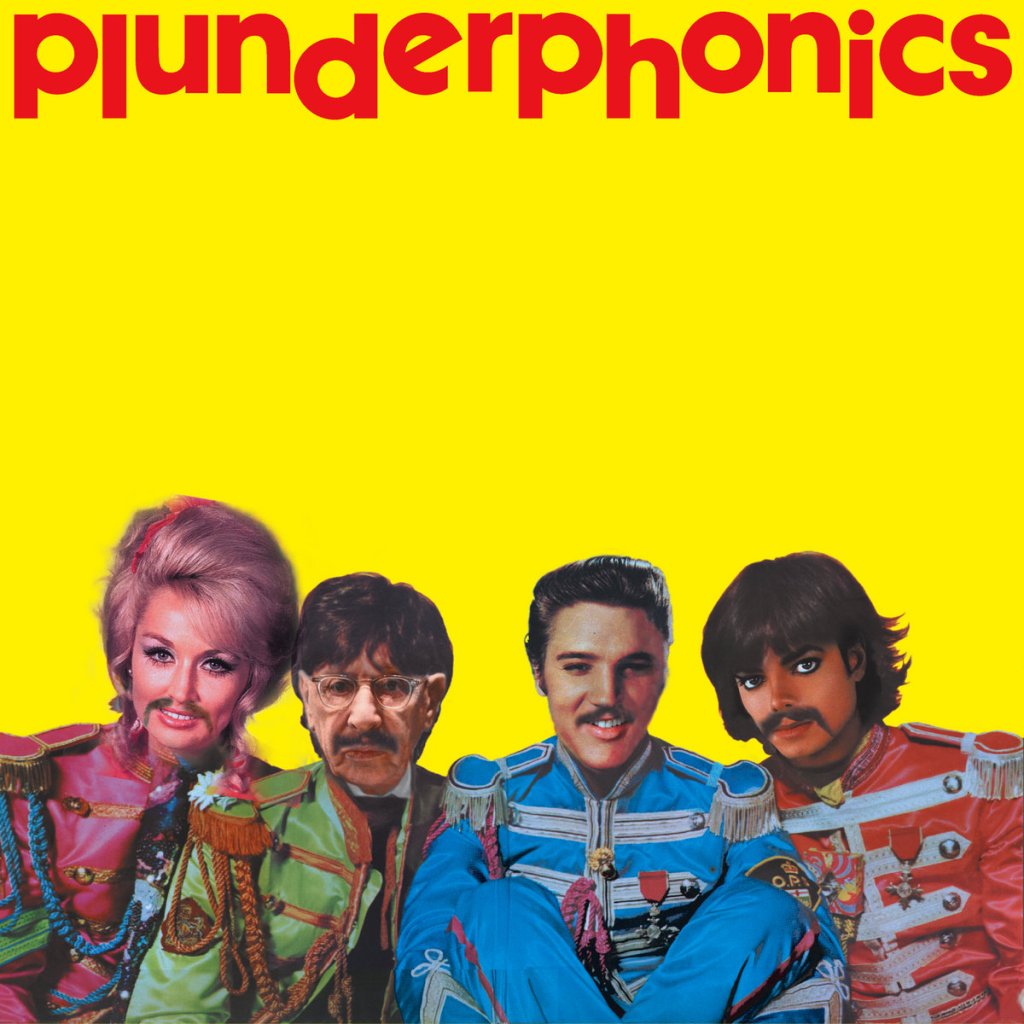
(August 2024) Episode 596 is JOHN OSWALD. A Canadian avant-garde composer, he is best known for Plunderphonics, a masterwork of tape editing and sound collage. While sampling existed before and would become standard as an additive within hip hop and other genres, Plunderphonics elevates sampling to the entirety of the art form. It was a sort of Bible to me, as Plunderphonics landed at a time when I was doing my own experiments with mashups on tape. Another notable work is Greyfolded, a collage made from more than 100 recordings of the Grateful Dead’s “Dark Star” over decades. Oswald’s work extends to instrumental avant-garde experimentalism, scores for dance, and other stuff.

Favorite album: Plunderphonics

Favorite song: Power

Favorite non-sample piece: Aparanthesi

Compared to expectations: same

Recommendation: Plunderphonics is essential; or try its extended compilation Plunderphonics 69/96.

590. Sarah Gibson

(August 2024) Episode 590 of the “opus project” is SARAH GIBSON, a contemporary American composer who sadly died of cancer last month at the age of 38. Her primary instrument was piano, but she also composed for chamber and voice. She was just starting to get going on larger orchestral pieces. The instrumentation is conventional but she dabbled in experimentation (like tapping the piano strings). Her compositions could be brightly lyrical or eerily moody.

Favorite piece: warp and weft

Compared to expectations: ↑

Recommendation: I felt a weird connection to the pieces, perhaps of lament for her lost potential, and a sadness for someone I never met.

588. Gustav Holst

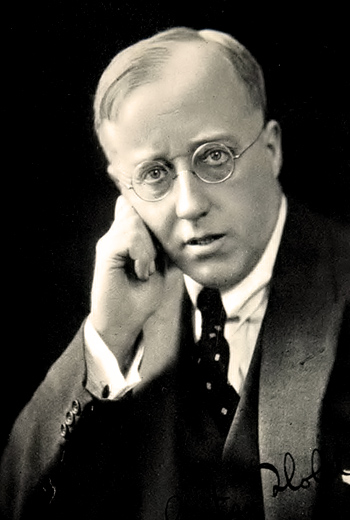
(July 2024) Episode 588 is GUSTAV HOLST. He’s best known for “The Planets,” both for its own inherent power and grace, but also for its wide influence on 20th century music, including rock, and especially on John Williams’ Star Wars themes. (It was inspired by astrological rather than astronomical ideas.) His compositions cover a big range, from opera to orchestral and lots of choral (secular and church). The other thing he’s known for is incorporating themes from English folk music and Indian mythology.

Favourite piece: The Planets

Favourite movement: Mars

Compared to expectations: same

Recommendation: The Planets is the best thing.

574. William Grant Still

(May 2024) Episode 574 is WILLIAM GRANT STILL, sometimes known as the “Dean of African-American composers. He wrote in an array of forms, including symphonies, ballets, operas, choral works, solo works and chamber music, in the middle part of the 20th century. His jazz-influenced style is similar to his American contemporaries Gershwin and Copeland which, while not my favorite, is distinctively evocative of the period. Still put forth political and racial themes – titles like “And They Lynched Him on A Tree” and “The Colored Soldiers Who Died for Democracy” are not subtle – which give his works added interest and historical context. Still’s distinctions as an African American include the first to conduct a major U.S. orchestra, the first to have his works performed by major American orchestras and opera companies, and the first to have an opera performed on national television.

Favorite piece: Symphony No. 4 “Autochthonous”

Compared to expectations: same

Recommendation: Even if you’re not a fan of the sound of that period he is worth checking out.

570. Catherine Lamb

(May 2024) Episode 570 is CATHERINE LAMB, a contemporary composer of sound. Her compositions explore the harmonic spaces between conventional notes, liminal tones and textures, aural shapes. Her sheet music consists not of standard notes but of geometric shapes, not unlike those of George Crumb. It sounds like liquid mathematics, and I marvel at the vision inside Lamb’s mind. I find this music mesmerizing and fascinating.

Favorite piece (solo/duo): Prisma Interius VII

Favorite piece (ensemble): String Quartet

Compared to expectations: ↑

Recommendation: It’s not for everyone, but I really like this kind of stuff.