577. Manfred Mann

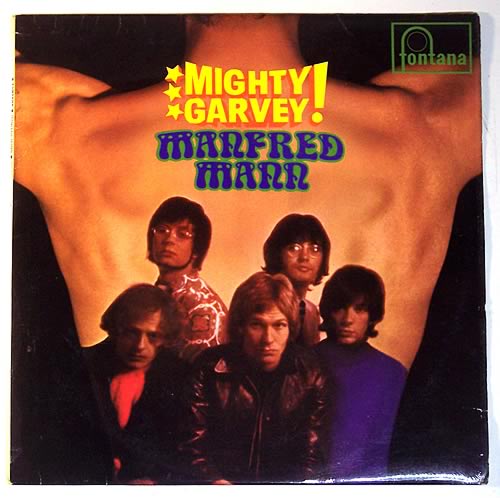
(June 2024) Episode 577 is MANFRED MANN. Continuing my tour of British Invasion-era bands, I must clarify that this episode is about Manfred Mann the band, not group member Manfred Mann for whom the band was named over his objection, and went on to a solo career. Confusing I know. They got attention as an R&B outfit which, to my ear, is arguably second best among UK groups behind the Stones. Their early pop hit, however, the instantly recognizable “Do Wah Diddy Diddy,” was not indicative of that sound. But variety was also their mark, as band members brought their interest in jazz to the mix. This makes their albums more interesting but less consistent, and there’s the typical complicating overlap of UK and US releases. After 1966, a new singer and a new label meant a new direction. Their three late-1960s albums offer a more sophisticated sound and some baroque rock gems; I like this stuff best although critics rate the R&B recordings higher.   

Favourite album: Mighty Garvey!

Favourite song: The Mighty Quinn

Compared to expectations: ↑

Recommendation: I usually commend a greatest hits disc for such groups, but this might merit a deeper dive into the two periods to see which you prefer.

575. Paul Revere & the Raiders

(June 2024) Episode 575 is PAUL REVERE AND THE RAIDERS. I had long thought Paul Revere and the Raiders were a plastic contraption trying to ride the wave of the British Invasion, largely due to their Revolutionary War-era costumes. I was very wrong. They had their origins in Boise, Idaho, of all places, as an instrumental rock band, but were able to capitalize on the emerging popularity of guitar rock with a version of “Louie, Louie” as other Pacific Northwest bands were doing the same. This sound, led by the semi-snarling vocals of Mark Lindsay, helped define what we now call American garage rock. Moving to Los Angeles and absorbing its influences, the Raiders’ seven (!) albums recorded between 1966 and 1968 are all really good, with a fair number of original compositions (although their best songs tended to be written by others). They transitioned well into the 1970s with more earthy songs, before fading off into the nostalgia circuit. One knock on their status (for me) was frequent lineup changes, with Lindsay and the eponymous Paul Revere Dick being the only constants.

Favorite album: Midnight Ride

Favorite song: Kicks

Compared to expectations: ↑

Recommendation: A compilation of their hits will be good, but you can dig in further with any of those 1966-68 albums from Just Like Us to Something Happening.

572. XTC

Episode 572 is XTC. As mentioned, I’ve enjoyed getting into the stuff that burst of the late-70s UK post-punk scene. Unlike others, XTC did not start out as a punk band, but they slid right into the emerging sound with an angular rhythmic attack and bouncy vocals. Their beats crept up to the edge of, but never got to, ska, giving echoes of Madness. At times their boisterous vocal style evokes Adam Ant, with a bit of Joe Jackson. Like contemporaries the Stranglers and Wire, XTC endured for years, creatively adapting their sound and style, while avoiding the sinkhole of 80s synths and gated drums. The early albums are their distinctive best, but my favorite thing they did was two records posing as a late-60s British psychedelic band, the Dukes of Stratosphear – spot-on homage to my most cherished of subgenres.

Favourite album (XTC): Black Sea

Favourite album overall: Chips from the Chocolate Fireball, the combined disc of the two Dukes of Stratosphear recordings

Favourite song: Generals and Majors

Song that is so familiar that I know from somewhere but I cannot remember where I know it from: Dear God

Compared to expectations: ↑

Recommendation: The Dukes albums for sure (that’s just me), but for the core sound, White Music, Drums and Wires, and Black Sea.

571. The Hollies

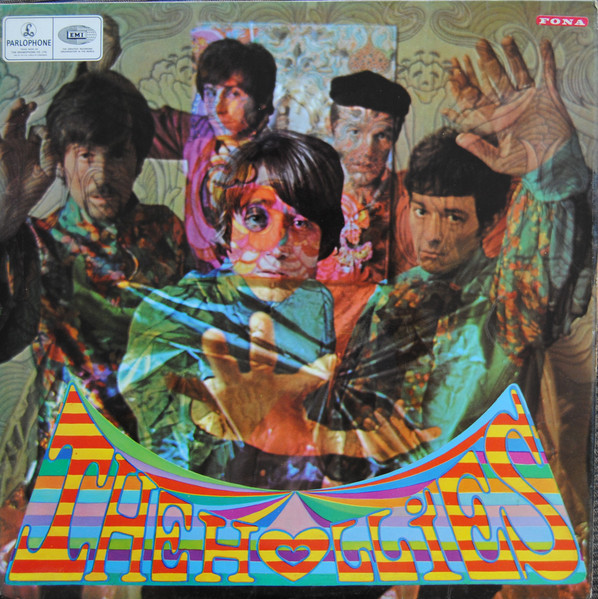
(May 2024) Episode 571 of the is THE HOLLIES. I have tended to discount British Invasion bands that were not among the Big Four, as but in the recent episode on Dave Clark Five, I realize my mistake with The Hollies too. I was surprisingly pleased to learn they are far more than the familiar handful of hit singles and for being launching pad for Graham Nash. Their best and most distinctive feature is the top-notch harmonies. Their arc is a familiar one: initial albums featuring R&B covers; blossoming when they start recording original material, including the obligatory 1967 psychedelic album; flowing into the 1970s with power pop and soft rock, enjoyable but not as good as before Nash left; then a slide into blah in the late 1970s, 1980s and 2010s. They always stayed on the lighter side of pop-rock, never getting adventurous like their more famous peers. And they’re still around today with two original members, and two others still alive but not with the group.

Favourite album: Evolution

Favourite song: Bus Stop

Compared to expectations: ↑

Recommendation: The four albums from Would You Believe (1966) to Butterfly (1967), although you’ll also want a greatest hits disc to capture Bus Stop, Dear Eloise, Long Cool Woman in a Black Dress, and The Air That I Breathe.*

* Fun fact: As noted in my Connections page, the chords from the verses in “The Air That I Breathe” (1972) were lifted by Radiohead into “Creep” (1992), and later used by Lana Del Ray in “Get Free” (2017) and in the title song “Red Swan” from the third season (2018) of the anime series “Attack on Titan.”

564. The Turtles + Flo & Eddie

(April 2024) Episode 564 is THE TURTLES and FLO & EDDIE. As a Frank Zappa enjoyer I always thought of the Turtles as the band Flo & Eddie (Howard Kaylan and Mark Volman) were in before they joined the second version of the Mothers of Invention, rather than the reverse. It turns out they provided a lot more enjoyable 60s LA pop/rock beyond “Happy Together,” “Elenore” and “You Showed Me.” Five good albums worth, augmented by their characteristic humor (the line “you’re my pride and joy etc.” from “Elenore” get me every time). After the Turtles folded, Flo & Eddie reached the prurient zenith of their humor with the Mothers (e.g. “Bwana Dik”) and recorded several quirky albums on their own.

Favorite album: The Turtles Present the Battle of the Bands

Favorite song: Happy Together

Favorite Flo & Eddie album: Fillmore East – June 1971 (with the Mothers)

Compared to expectations: ↑

Recommendation: Any of the albums are good; I like Battle of the Bands because of its intentional variety, although Happy Together scores higher.

563. The Dave Clark Five

(April 2024) Episode 563 is THE DAVE CLARK FIVE. Of all the contemporaries, the Dave Clark Five looked and sounded the most similar to the Beatles. They even knocked “I Want To Hold Your Hand” off the #1 slot. Their hit “Because” would fit nicely on the Hard Days Night soundtrack. They had success in the U.S. too and were the second British band to appear on the Ed Sullivan show. And like Lennon-McCartney and unlike other peers, Clark and Smith wrote many of their best songs, like “Glad All Over,” “Bits and Pieces,” “Any Way You Want It,” “Catch Us If You Can.” They defied trends by not having a psychedelic period and folded as the 60s ended. As was the custom, they released separate US and UK albums and there’s a lot of filler on them, so choosing a favorite album is a bit hollow.

Favourite album: Glad All Over

Favourite song: Because

Compared to expectations: ↑

Recommendation: A greatest hits album is all you need and worth having.

561. Pavement

(April 2024) Episode 561 is PAVEMENT. I’m too old to have had 90s bands be a formative part of my youth, but still close enough in age to those for whom they were. So I get that Pavement’s slacker rock fit the zeitgeist of the time. And why they gained an indie cult following. But listening to it at a remove, it doesn’t work for me. Kinda boring, gotta say. It wasn’t all bad. But too much strum-beat in here and I can’t stand strum-beat.

Favorite album: Crooked Rain, Crooked Rain

Favorite song: Trigger Cut / Wounded-Kite at :17

Compared to expectations: ↓

Recommendation: If this gives you an emotional jolt of nostalgia, sure. But I can’t recommend coming into this fresh other than as a pop culture historian.

560. The Nice

(April 2024) Episode 560 is THE NICE. There are some bands only worth knowing as the launching pad for a famous artist. The Nice is one of those. This is where Keith Emerson got his start performing wizardry and violence on his Hammond organ before doing the same with Lake and Palmer. Mixing rock, classical and jazz themes, the Nice helped introduced prog rock, so there is some historical interest. Apparently they got a cult following as a wild live act, although the appeal doesn’t transfer to the recordings, which suffer from weak vocals. Fun fact: Emerson’s trick of sticking a knife between keys to sustain the notes came from roadie Lemmy (yes, him) who gave him a Hitler Youth knife for that purpose. Also, they started out as the backing band for P.P. Arnold, a former back-up singer for Ike and Tina Turner who moved to London for a solo career.

Favourite album: Nice

Favourite song: Rondo

Compared to expectations: ↓

Recommendation: For prog rock enthusiasts only.

559. Redd Kross

(April 2024) Episode 559 is REDD KROSS. They provided a combination of hard guitars and melodic songcraft that filled the gap between 1970s power pop and the 1990s pop punk and power pop revival. LA-area brothers Jeff and Steven McDonald started out with a punk sound but added the melodies by the late 1980s. By its label I should be all over this, but I found the sum less than the parts. Generally their songs lack the hooks that I look for in power pop songs, although their two 2010s albums did do a better job at that.

Favorite album: Researching the Blues

Favorite song: The Nu Temptations

Compared to expectations: ↓

Recommendation: The two 2010s albums, but I suspect that true fans will point to their 1980 EP.

558. The Animals

(April 2024) Episode 558 is THE ANIMALS. I started to write about them as a second-tier British Invasion band but then realized that’s an American-centric view. In the UK they developed a fiery presence on UK R&B scene. But just as I wrote about how the Searchers music proved the magic of the Beatles within Merseybeat, the Animals demonstrate how superior the Rolling Stones were among the blues-based UK bands. The original Animals played with gusto, but they lacked song-writing chops; their main four hits on U.S. radio (“House of the Rising Sun,” “We Gotta Get Out Of This Place,” “It’s My Life,” and “Don’t Let Me Be Misunderstood”) were composed by others. They fell apart early, and in 1966 Eric Burdon formed another group with his name up front. To me this is the most interesting period, as the albums have a psychedelic and experimental approach, providing the minor hits “San Francisco Nights” and “Sky Pilot.” Bottom line, Burdon’s voice never appealed to me.

Favourite album: The Twain Shall Meet

Favourite song: House of the Rising Sun

Compared to expectations: same

Recommendation: A great hits LP is enough.